
The Roman Houses of the Celio
Beneath the Basilica of Santi Giovanni e Paolo lies a web of Roman buildings that were built, joined and transformed over four centuries. First rented flats and shops, then an elegant domus, finally a Christian place of worship.
The discovery
In 1887 Father Germano di San Stanislao, a Passionist priest and rector of the basilica, began digging beneath the church floor in search of the tombs of its patron saints.
Instead of a simple burial he found a complex of more than twenty rooms, thirteen of them frescoed. Excavations went on for a long time. The Houses first opened to the public in 2002 and have been open continuously since 2022.
Four centuries in one building
Early 2nd century
A two-storey house is built with a small private bath complex, the balneum.
Early 3rd century
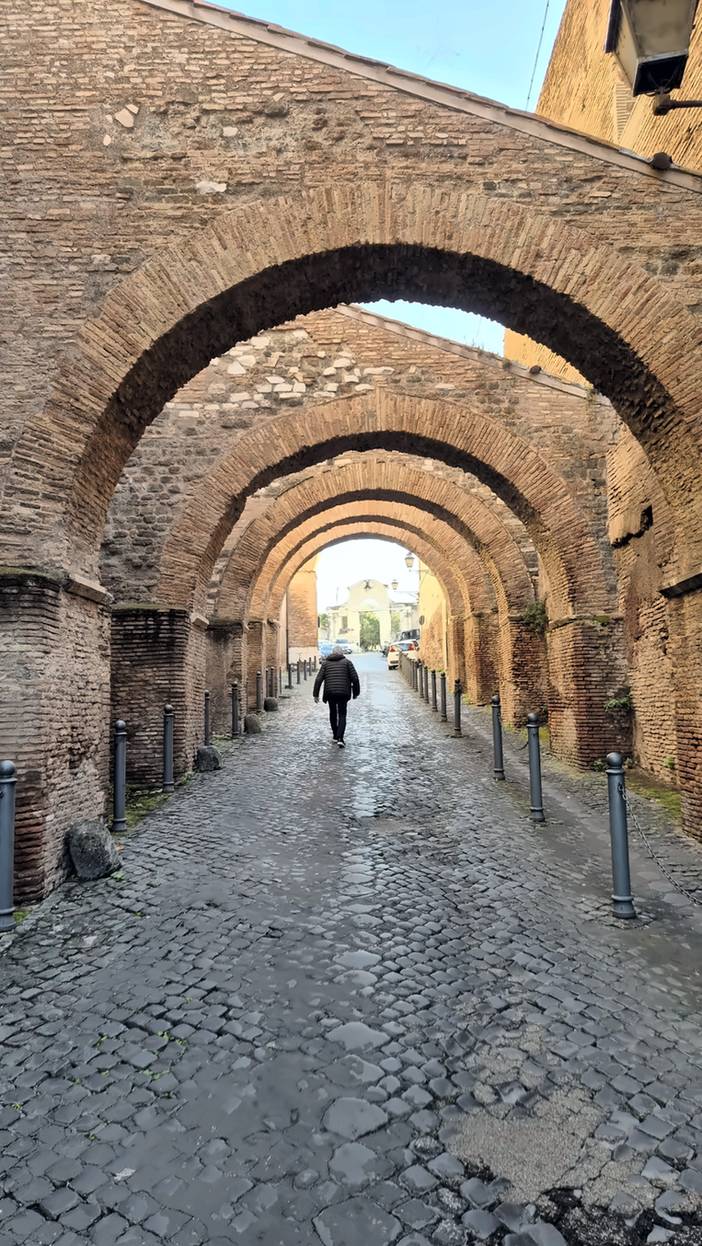
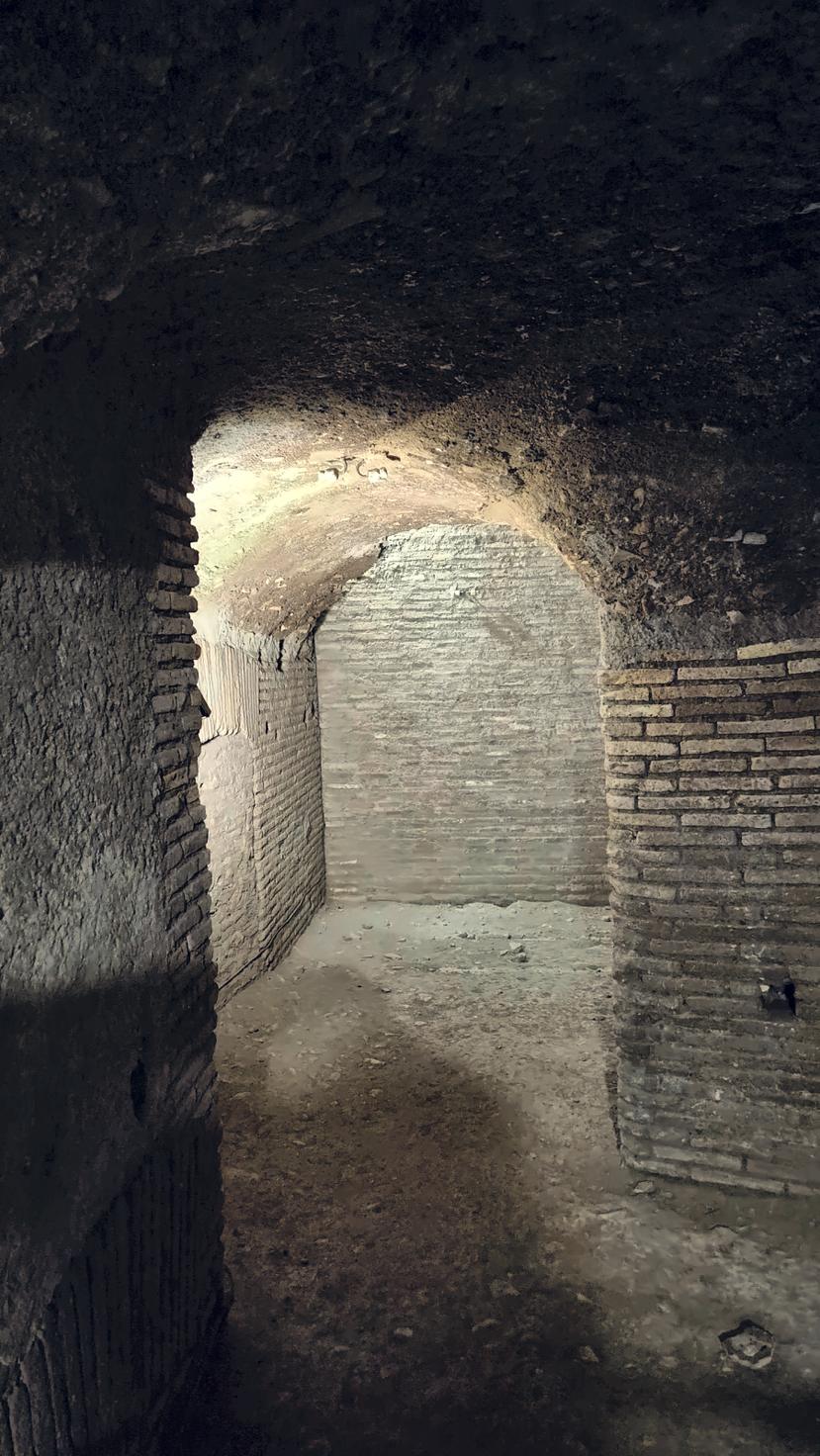
Next to it rises an insula: shops at street level and apartments above. The blocked arches along Clivo di Scauro are still those of the shops.
Late 3rd – early 4th century
A single owner joins the buildings into a luxurious domus. The courtyard becomes a nymphaeum and the rooms are frescoed.
Mid-4th century
The house hosts a titulus, a Christian place of worship linked to the senator Byzas and then to his son Pammachius.
362
According to tradition, John and Paul are put to death in their house under the emperor Julian and buried here.
Second half of the 4th century
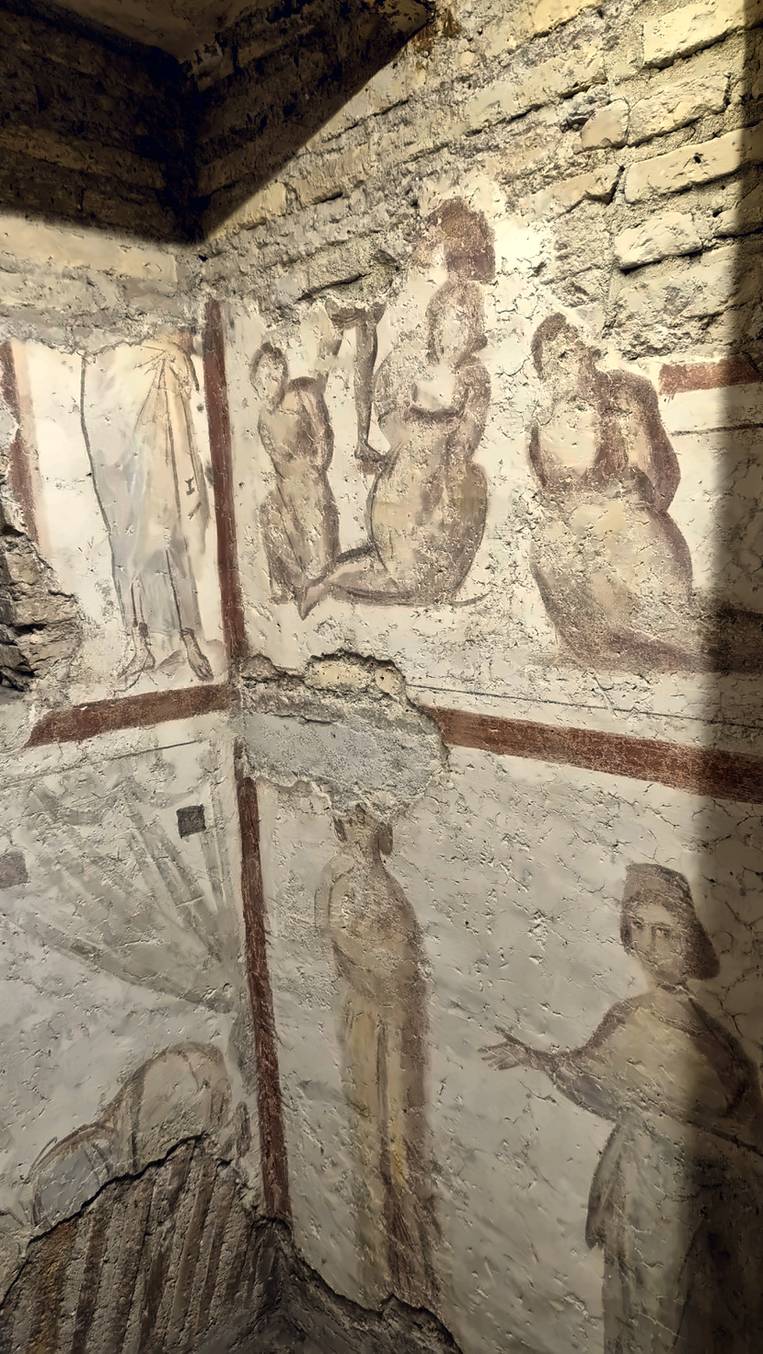
The Confessio is built, the small room from which the faithful could honour the memory of the martyrs.
Late 4th – 5th century
The basilica is built above the house. The upper floors are demolished and the lower ones filled in: this is what preserved them.
1887
Father Germano di San Stanislao brings the rooms back to light.
The rooms
The Nymphaeum
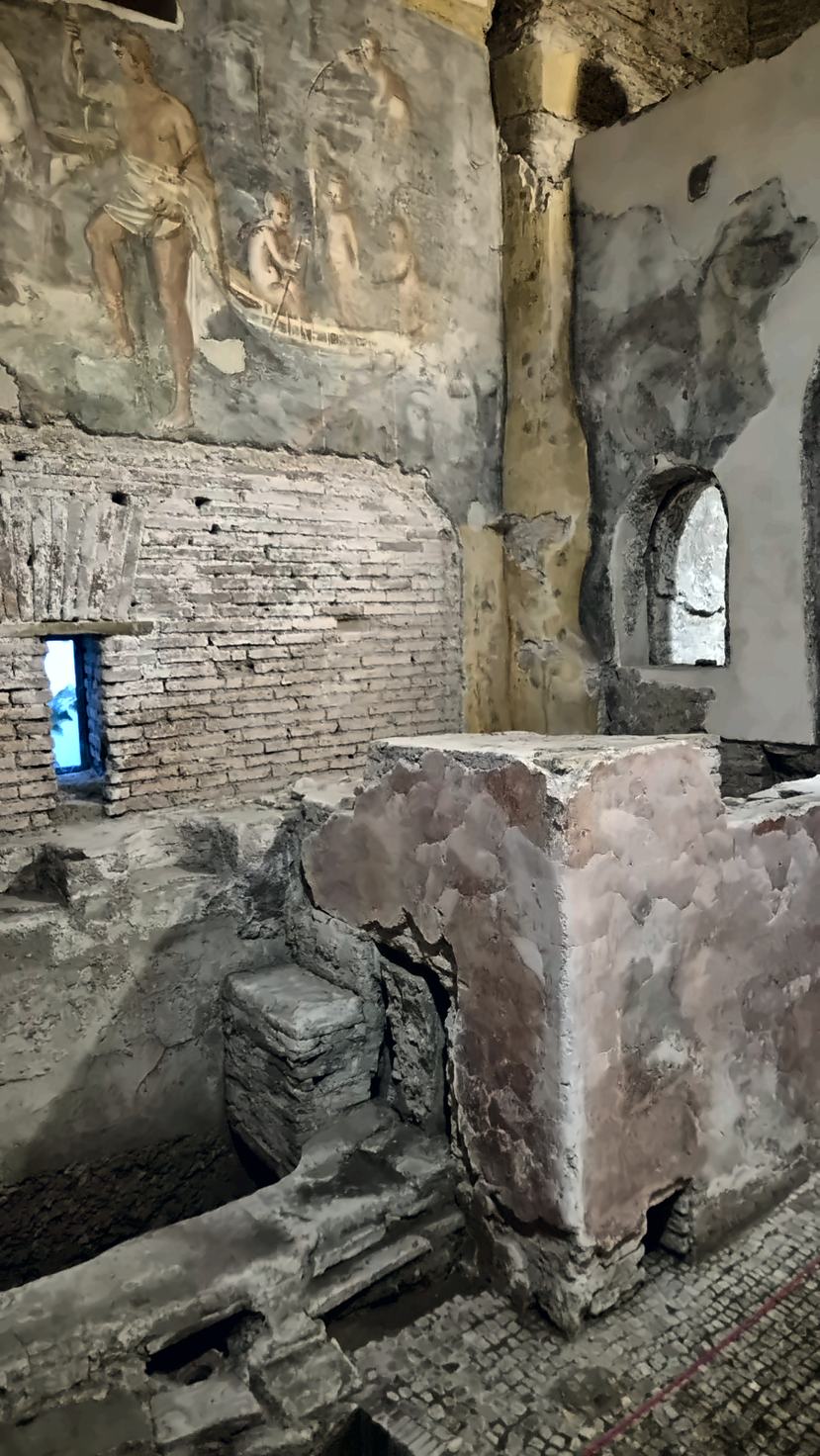
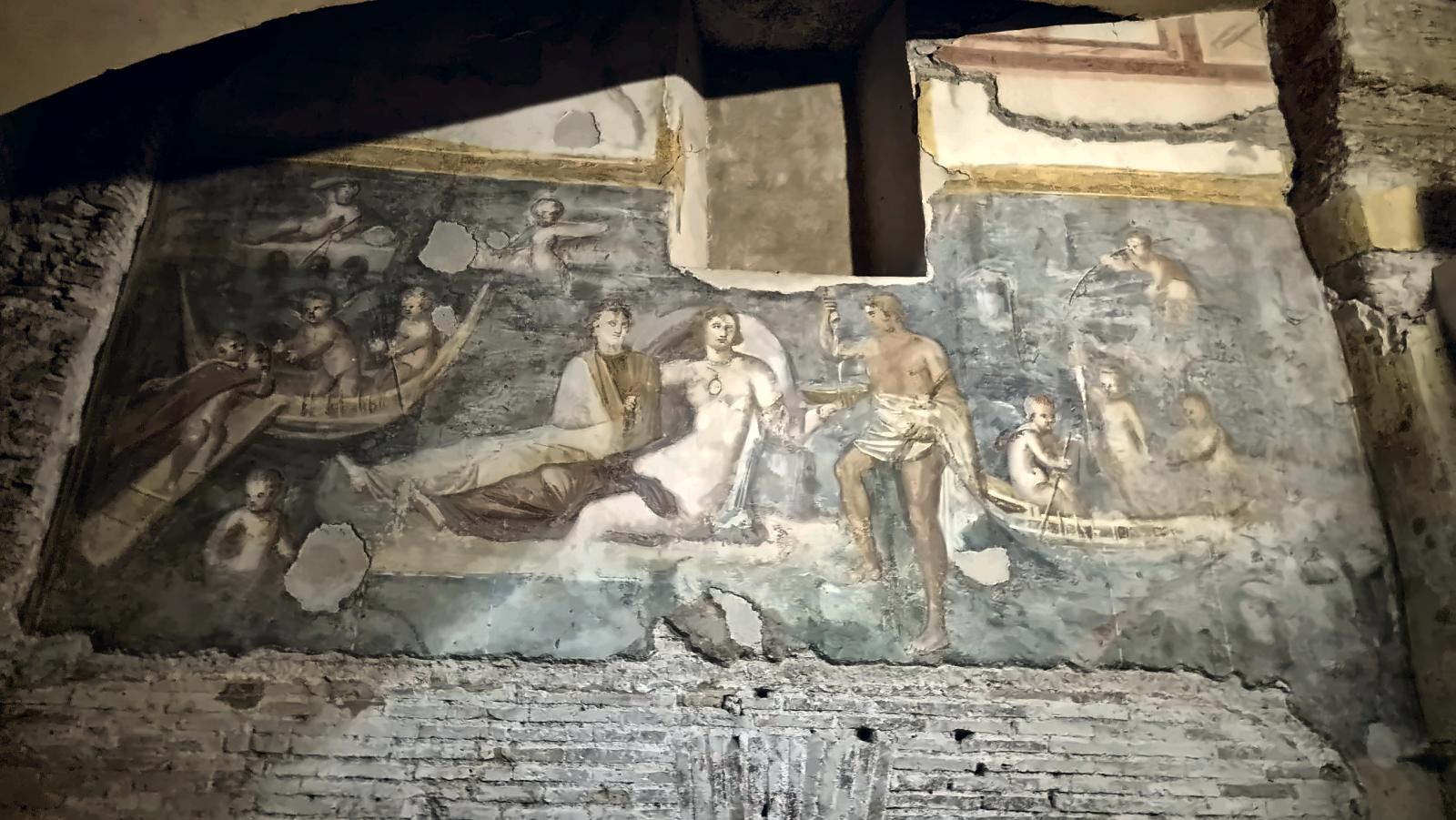
Once the courtyard of the insula, it became a monumental fountain when the buildings were joined. The large painting of sea deities and cupids fishing from boats is the most famous in the Houses: many scholars see in it the return of Proserpina from the underworld.
The Hall of the Genii
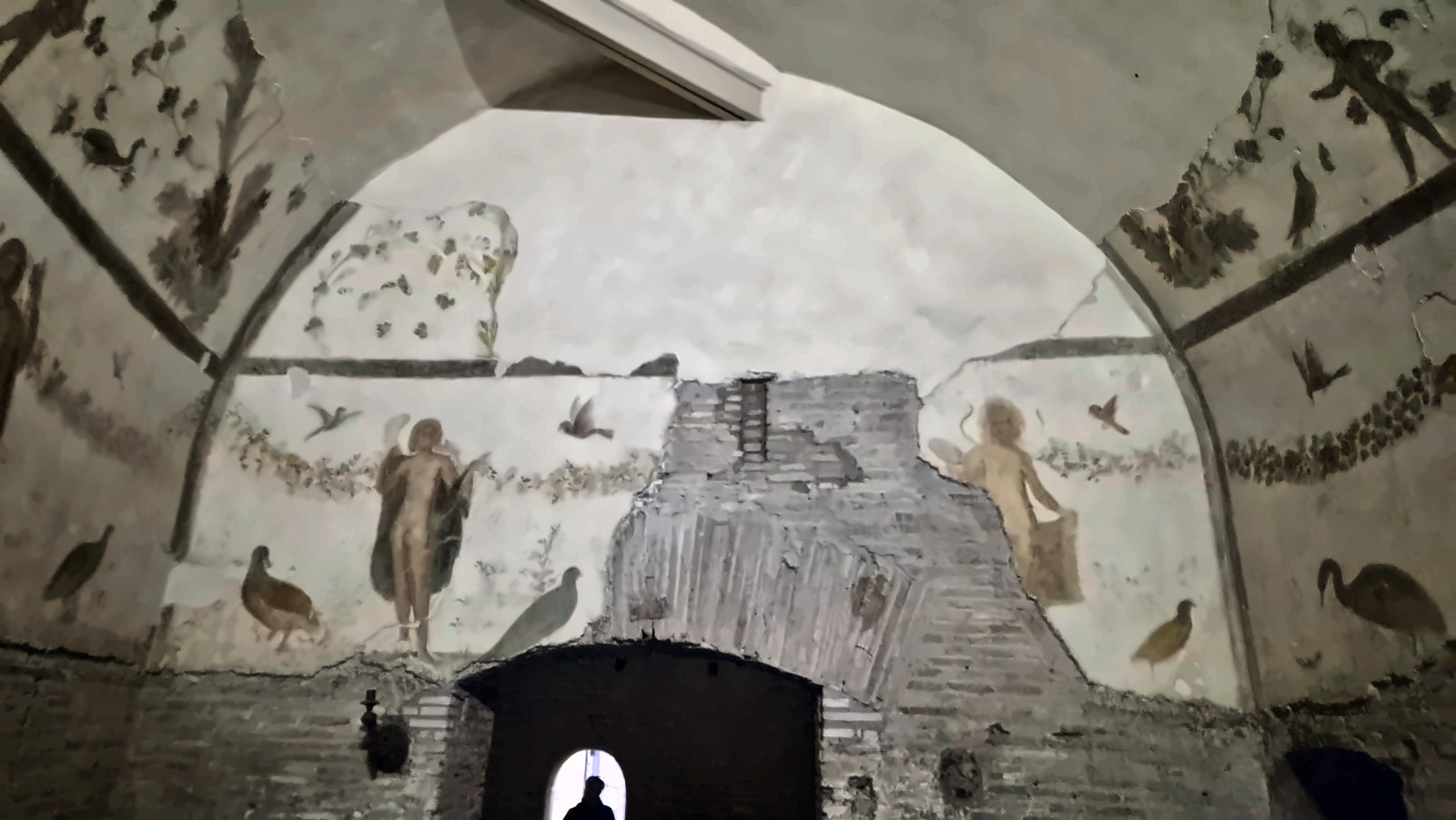
Named after the winged genii painted on its walls among garlands and plant motifs. It is one of the rooms that best conveys the domus at its most splendid.
The Hall of the Praying Figure
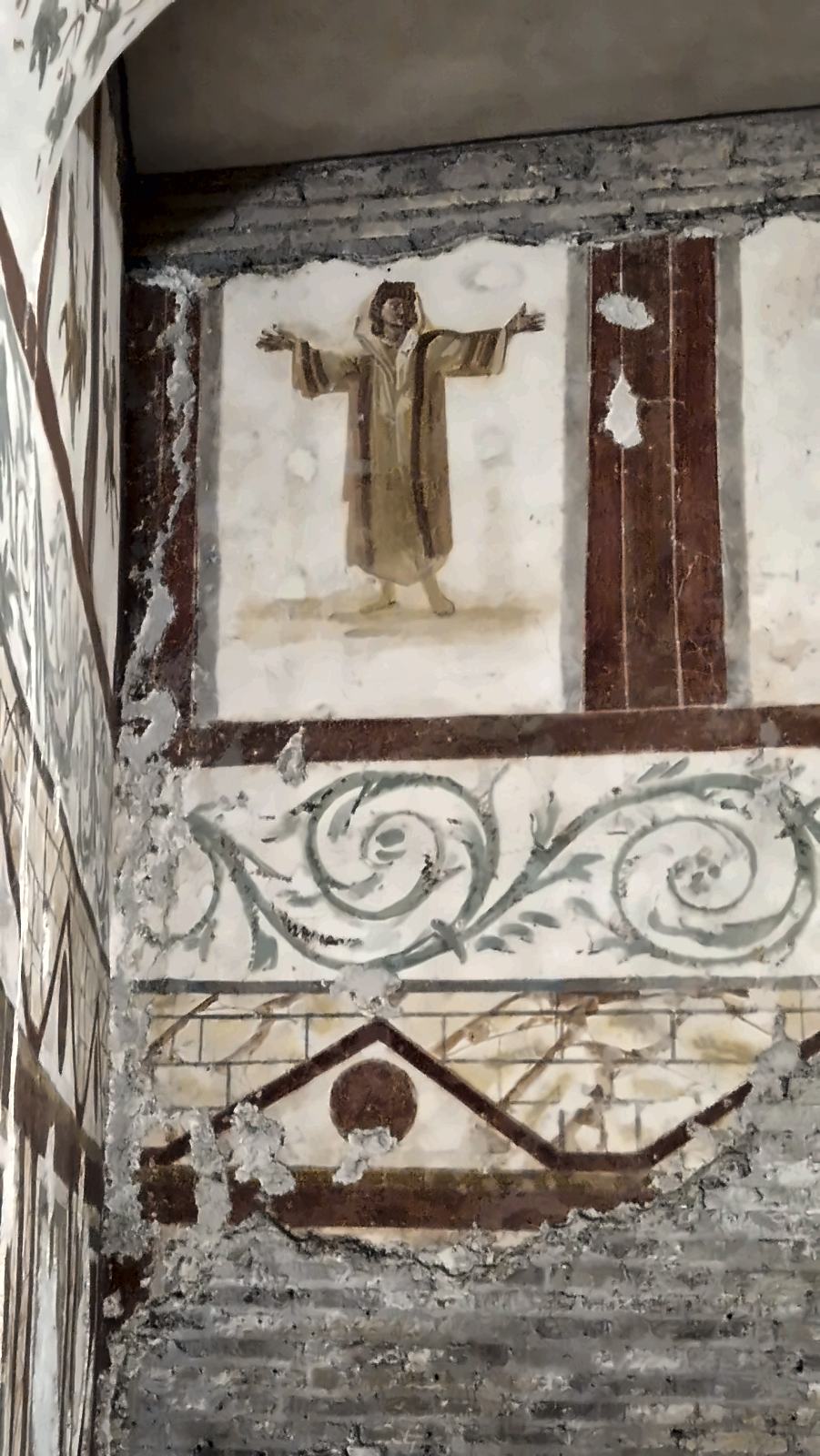
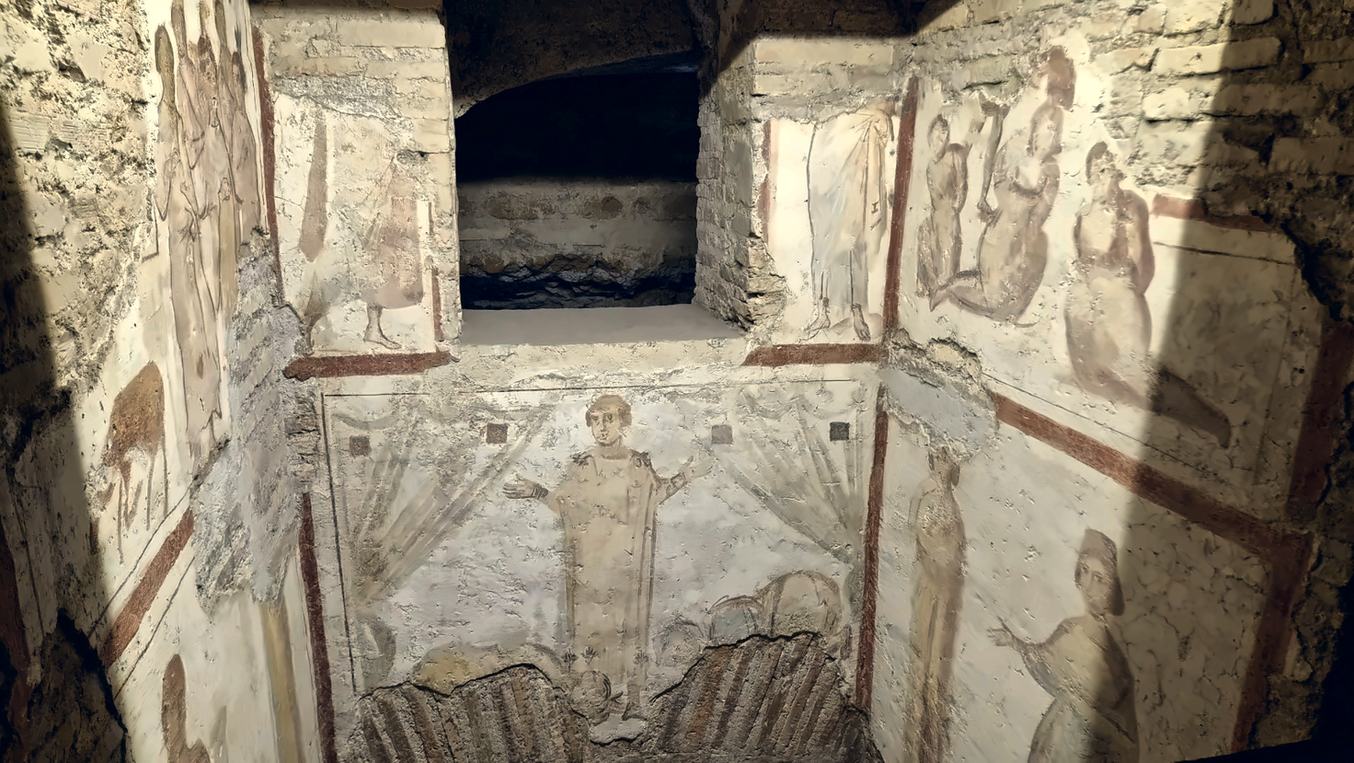
At the centre of the decoration is a figure with open arms in prayer, the orant. For many scholars it shows that the house was already used by a Christian community at this stage.
The Confessio
The small room built to keep the memory of the martyrs. Through a small window, the fenestella confessionis, the faithful looked towards the burial place. Its walls, frescoed in the second half of the 4th century, tell the story of the martyrdom.

The medieval oratory
It shows that the place remained sacred after the basilica was built.
The Antiquarium
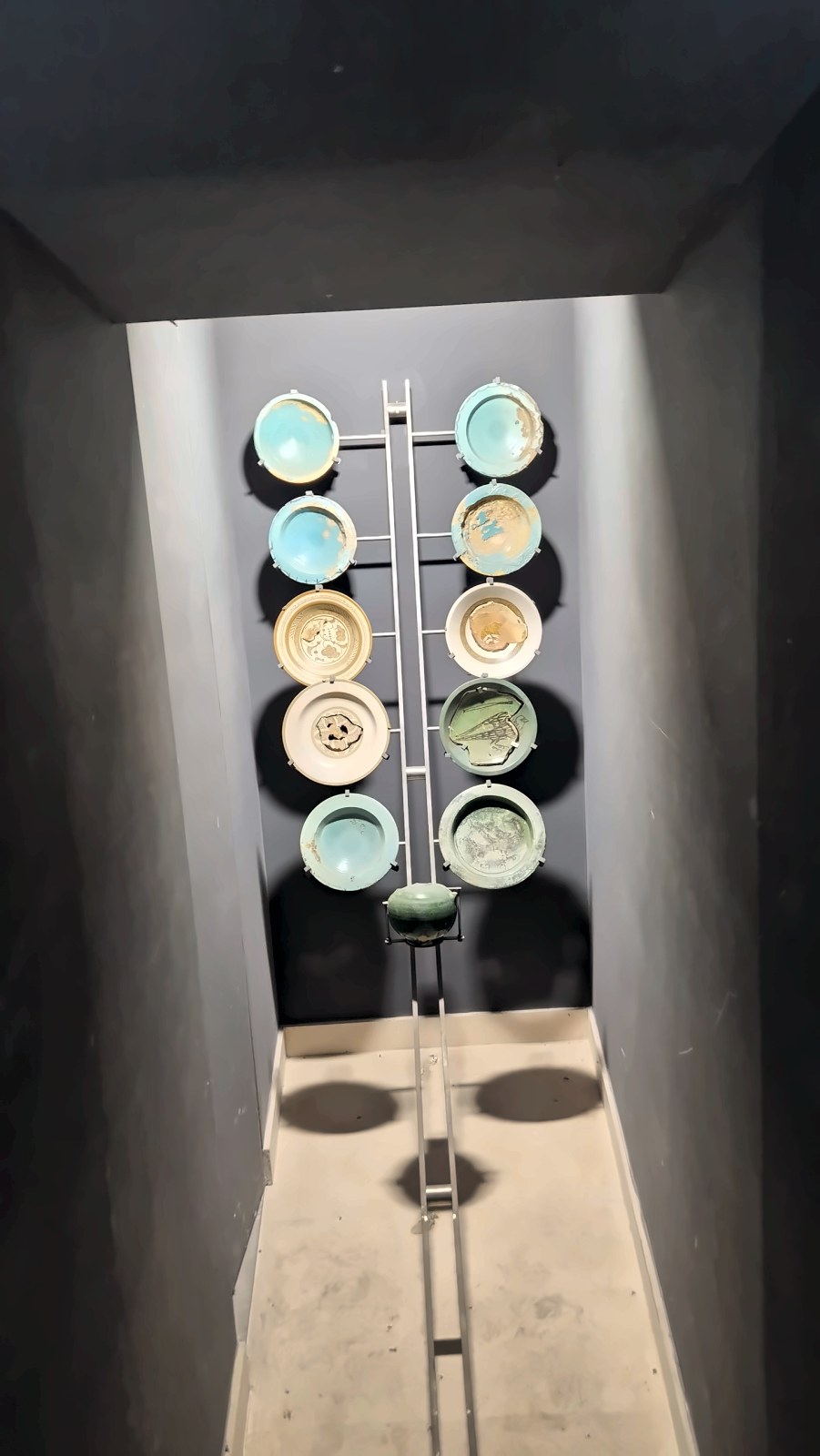
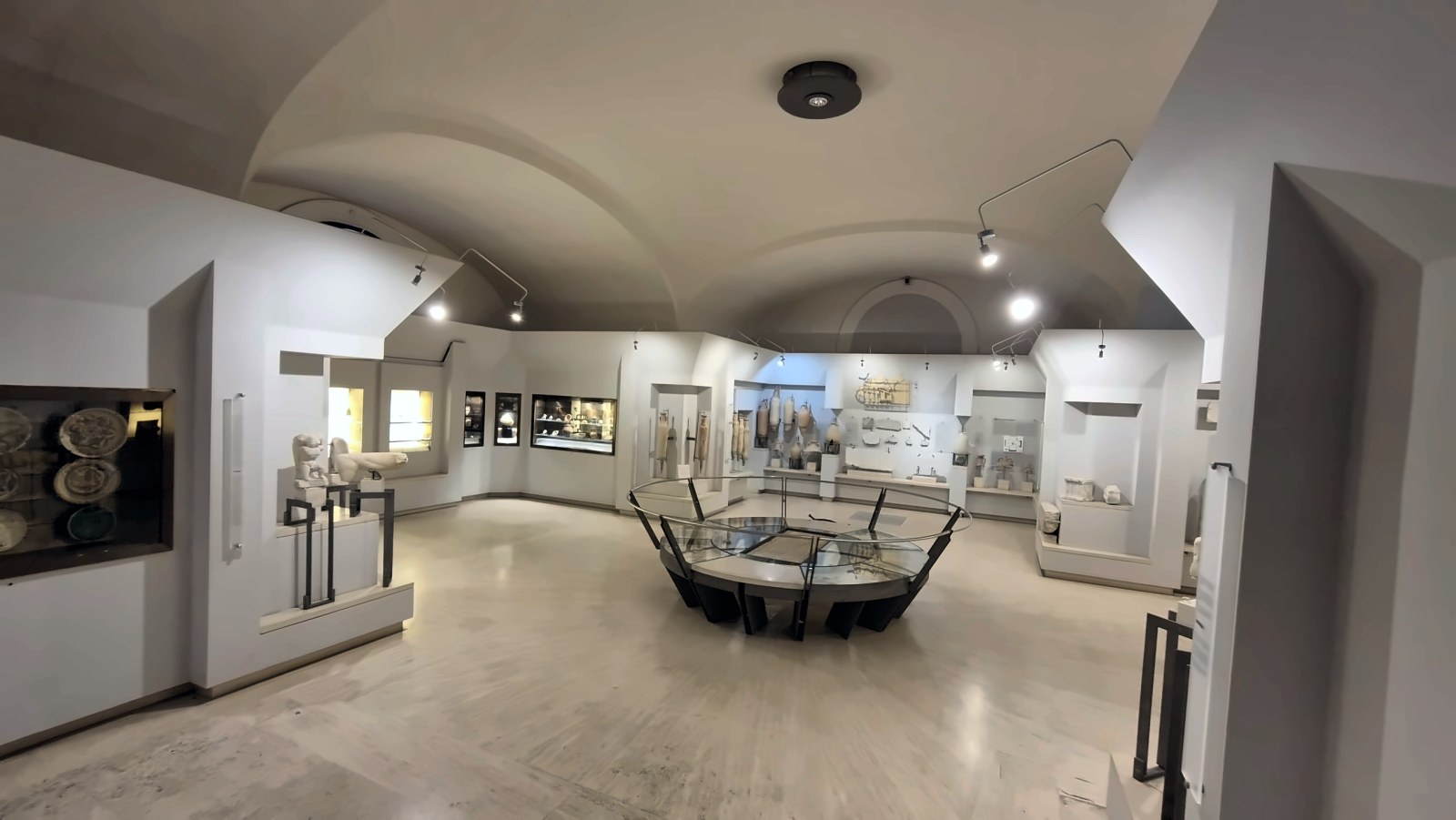
It holds the finds from the excavations: pottery, amphorae and fragments. It helps to picture the daily life of the people who lived and worked here.
Saints John and Paul
According to tradition, John and Paul were two Christian Roman officials. In 362, under the emperor Julian, they were secretly killed in their house on the Celio and buried there.
The memory of their martyrdom made the place sacred and led, in the following decades, to the building of the basilica that bears their name.
Gallery
Come and see them up close
Open daily, 11am to 6pm.